
One of the most popular elements of our cosmetic dermatology course is the training of
chemical peeling.
Chemical peeling offers beauticians a wonderful entry-level treatment option, i
which promotes the "skin first" approach. In particular, advanced peeling offers results
fantastic, which can set you apart from others, as a specialist.
Here we explore the different types of skin peeling that students learn and examples
how they can be part of a holistic aesthetic treatment plan.
However, as you will learn, chemical peels and injections are usually not performed at the same time
day.
Popular types of chemical peeling
Glycolic peeling
• Superficial chemical peeling to medium depth using glycolic acid.
• Ensure a brighter and more toned skin.
• Best for sun damage and superficial pigmentation issues.
Acidi Salicylic
• Superficial skin using salicylic acid
• Exfoliate for brighter and cleaner skin.
• Provide anti-inflammatory benefits.
• Best for acne, skin congestion and oily skin problems.
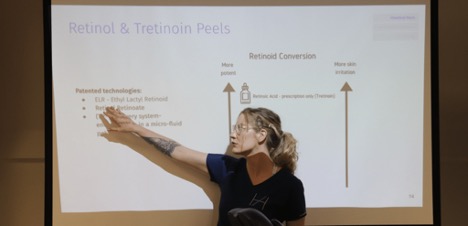
Retinol Peel
• Medium-depth chemical peel using retinol, a topical form of vitamin A.
• Deeply exfoliate for a smoother skin texture.
• Improves pigmentation issues including sun damage.
• Reduces the appearance of fine lines and helps to relax the skin.
• Best for acne, congested and oily skin, hyperpigmentation and/or patients that require anti-aging effects.
• Especially useful for skin types with high Fitzpatrick (darker skin tones).
TCA
• Medium depth chemical peel using trichloroacetic acid (TCA).
• Stronger chemical peeling offered in a non-surgical environment
• Targets the papillary dermis, while superficial peelings have more of an intra-epidermal effect.
• Associated with higher downtime and peeling effect
• Layered peeling that renews the epidermis, providing a brighter and more uniform skin.
• Reduces sun damage, fine lines and sagging skin.
• Increases collagen production.
• Best for sun damage, skin aging concerns, pigmentation issues and some scars.