
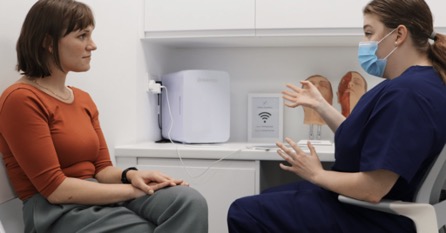
Want to know how to personalize your aesthetic patient consultations?
Here are our expert tips for the elements that every clinical consultation should contain.
Note we say "clinical" consultation; we believe that every consultation should be done personally, no
from a distance.
How to do a complete aesthetic consultation of the patient:
• Make your patient feel comfortable and relaxed.
It may seem strange and we often say this, but it is true and we should
repeat: people may not remember what you say, but they will always remember that
how you make them feel
The best way for a calm and positive consultation with the patient is for both parties to
communicate clearly and openly. Be sure to make your patient feel comfortable sharing
with you the necessary information. Not only that this report will help your consultation
go well, but it also tends to lead to better treatment results.
• 8 Steps for collecting medical information during the consultation.
You should always remember to discuss the following points with your patient.
Medicines: prescription, over the counter (OTC) and/or herbal?
▪️Allergies and intolerances? Food, environment or drugs?
▪️Psychiatric/mental health (PMH)
▪️Aesthetic treatment history: what treatments have they had, when, and where?
Are they planning to go on vacation or travel soon?
▪️Their invasion (Time when.. )
▪️Are they pregnant, breastfeeding, have they undergone IVF, or are they peri/menopausal?
▪️Social history/hobbies: drinking, smoking, horse riding, for example.
Discuss their concerns, goals, and your treatment recommendations
This seems straightforward enough, but you'll often find that patients won't know
exactly what they want, in terms of treatment.
It is up to you to discuss this with them and, as before, try to get them to open up to
in order to get to the bottom of their worries. For example, someone can come to you
seeking botox to soften their forehead because they feel sad. However,
it could happen that this effect is actually the result of perioral lines or folds between them
the face. Once you know what they are trying to achieve, you can start discussing recommendations
yours."
Agree on a treatment plan
After describing your treatment recommendations, explain why you are suggesting them, what
effects they should have, how long they should last, etc. You should also discuss the risks and
the possible complications associated with these, and how you would manage them, if they occur.
All medical procedures come with risks, it is a matter of making sure that the patient
yours to be fully informed in order to make a final decision if you wish
or not to continue with the treatment. This is also your chance to highlight the training
and your skills as a medical aesthetic practitioner by demonstrating knowledge and skills
yours in the prevention and management of complications.
Make sure you get informed consent
After you have completed the consultation and the patient has decided to continue with the treatment,
be sure to get their signatures on the relevant consent forms. Explain to them
give them time to read the forms and show them where to sign when they are ready.
If there are any checkboxes within these consent forms, for example consent for
contact them for marketing purposes or consent to use their images for
marketing, emphasize them so that they are fully aware of what they are. doing
agree
Provide appropriate advice for aftercare and emergency contact details
Just think logically and review the consent forms and instructions.
Make sure that all the advice given can be supported by a scientific reasoning and
explain this to your patient so that they are more likely to be compliant
If your patient follows the aftercare advice properly, there is less risk of
complications and complaints, so do your best to explain this to him. You may want to have
aftercare tips for popular treatments printed on handouts
give to patients before they leave and/or add this information to your website
internet if you have one. You can also email this to like
follow-up, after they leave your clinic.
One thing that every good aesthetic practitioner should do, in addition to giving relevant advice
for follow-up care, is to give each patient emergency contact details in advance
leave.
Keep an eye on time
it is essential to remember that you are working in a real clinic and every appointment has
a time limit. Time management is important, so make sure you leave time
enough to carry out the consultation with your patient completely, apart from any treatment.